Oracle Java SE7 Programmer Level 1 Certification

  • Oracle Java SE7 Programmer Level 1 Certification , Singapore elarning online course
  • Oracle Java SE7 Programmer Level 1 Certification , Singapore elarning online course
  • Oracle Java SE7 Programmer Level 1 Certification , Singapore elarning online course
  • Oracle Java SE7 Programmer Level 1 Certification , Singapore elarning online course
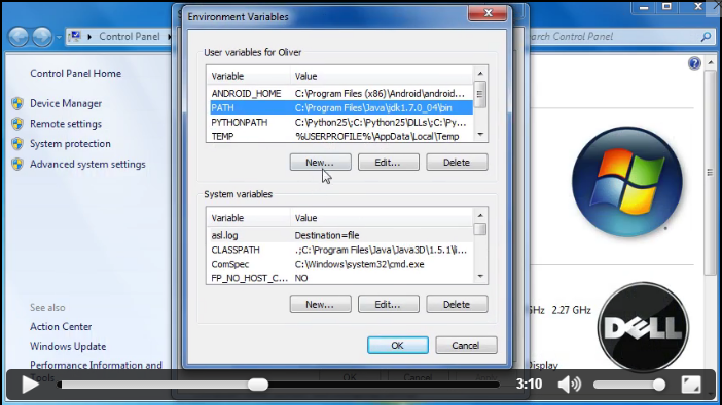
  • Oracle Java SE7 Programmer Level 1 Certification , Singapore elarning online course
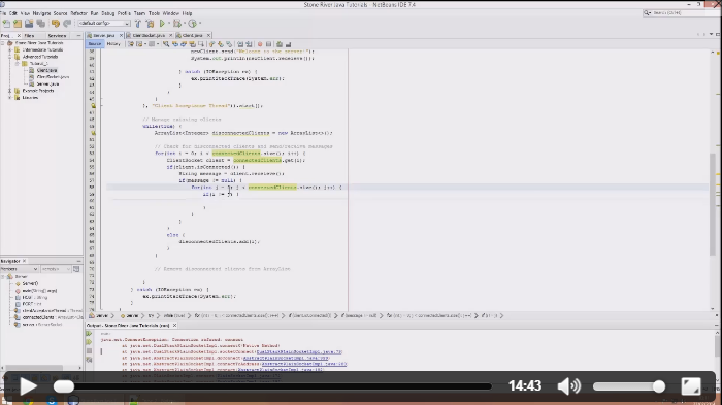
  • Oracle Java SE7 Programmer Level 1 Certification , Singapore elarning online course

Course Description

Have you ever wondered how all those cool applications and games around the web are made? The answer is: Java. Java is the most commonly used programming language in the world. Get started learning Java today, and in a few days with this Java Tutorial for Beginners you'll be a pro. To make your life a bit easier, you will learn Java from scratch using the NetBeans environment. Java allows you to play online games, chat with people around the world, calculate your mortgage interest, and view images in 3D, just to name a few. It's also integral to the intranet applications and other e-business solutions that are the foundation of corporate computing.

Everything you need to know for Java Certification.

- Know the basics of Java programming language
- Learn the the topics in this course to pass Oracle's Java Programmer Level 1 Exam
- Know how to code using Java after the completion of this course
- Be able to apply the knowledge into your own projects after this course


Course Objectives

1. Solve programming problems using decision constructs, loop constructs, data types, classes, objects and inheritance
2. Learn all the necessary content to pass Oracle's Java Programmer Level 1 Exam
3. Follow the exact curriculum used by Oracle to prepare developers for the exam
4. Gain proficiency at Java from beginner to intermediate levels
5. Tackle real world problems both for practice and entry-level employment


Related Courses
  • Certified Cyber Threat Intelligence Analyst

    Certified Cyber Threat Intelligence Analyst

    SGD $299.00

    Course Description

    The Cyber Security Threat Intelligence Researcher Certification will help you acquire the skills needed to find out who is behind an attack, what the specific threat group is, the nation from which the attack is being launched, as well as techniques being used to launch this attack. You will know how to take a small piece of malware, find out who is responsible for launching it, the threat actor location and also how to take down that threat actor, with the support of your local law enforcement. In today’s cyber security landscape, it isn't possible to prevent every attacks. Today’s attackers have significant funding, are patient, sophisticated, and target vulnerabilities in people and processes as well as technologies. With organizations increasingly relying on digitized information and sharing vast amounts of data across the globe, they have become easier targets for many different forms of attack. As a result, every company’s day-to-day operations, data and intellectual property are seriously at risk. In a corporate context, a cyber attack can not only damage your brand and reputation, it can also result in loss of competitive advantage, create legal/regulatory noncompliance and cause steep financial damage. Today’s secure environment will have vulnerabilities in it tomorrow, so an organization cannot allow itself to become complacent. There is only so much an organization can do by defending itself against threats that have already occurred. If an organization only reacts to new threats as they come up, are likely acting too late. It is important to understand and prioritize cyber threat intelligence processes, and how they can be integrated into an organization’s security operations in a way that adds value.  Cyber threat intelligence (CTI) is an advanced process enabling organizations to gather valuable insights based on analysis of contextual and situational risks. These processes can be tailored to the organization’s specific threat landscape, industry and market. This intelligence can make a significant difference to organizations' abilities to anticipate breaches before they occur. Giving organizations the ability to respond quickly, decisively and effectively to confirmed breaches allows them to proactively maneuver defense mechanisms into place, prior to and during the attack. In this course, we’ll introduce you to the 8 phases of threat intelligence: Hunting - The goal of hunting is to establish techniques to collect samples from different sources that help to start profiling malicious threat actors. Features Extraction - The goal of Features Extraction is to identify unique Static features in the binaries that help to classify them into a specific malicious group. Behavior Extraction - The goal of Behavior Extraction is to identify unique Dynamic features in the binaries that help to classify them into a specific malicious group. Clustering and Correlation -  The goal of Clustering and Correlation is to classify malware based on Features and Behavior extracted and correlate the information to understand the attack flow. Threat Actor Attribution - The goal of Threat Actors is to locate the threat actors behind the malicious clusters identified. Tracking - The goal of tracking is to anticipate new attacks and identify new variants proactively. Taking Down - The goal of Taking down is to Dismantled Organized Crime Operations

    Read more...

  • Become a High Earning Cloud Architect

    Become a High Earning Cloud Architect

    SGD $20.00

    Course Description

    The demand for Cloud Architects is very high and you as a technical guru can take advantage of this. If your currently a Solutions Architect, System Administrator or Developer this course is a great transition. As your well credentialed instructor I will be working with you for over 10 hours going through what a Cloud Architect needs to know. We will cover the basics of cloud, then we will cover cloud frameworks, cloud ecosystems, cloud migrations, cloud analysis, etc. This is a vendor neutral course where you will learn the basics but i will apply the fundamentals to the three major providers so you can take this knowledge and run. We will touch on Google Cloud, Amazon Web Services and MS Azure for IaaS/PaaS. Salesforce and Servicenow for SaaS as well as O365 briefly. Lastly, I will go through what you need to look for in a Cloud role and the best resources for finding a new job or gig. The materials are based on the The Professional Cloud Solutions Architect certification which equips solution architects with insights and familiarity with the topology and ecosystems that are being created as a result of cloud technology adoption and operating models. These materials are Vendor neutral.

    Read more...

  • Google Cloud Platform Assoc. Cloud Engineer Bootcamp

    Google Cloud Platform Assoc. Cloud Engineer Bootcamp

    SGD $29.00

    Course Description

    During the course I will provide insight into the GCP Cloud Engineer exam and walk thru main exercises around managing a GCP Cloud. We will be going thru demos, reviewing content and providing you the top 10 things to remember before taking the exam. An Associate Cloud Engineer deploys applications, monitors operations, and manages enterprise solutions. This individual is able to use Google Cloud Console and the command-line interface to perform common platform-based tasks to maintain one or more deployed solutions that leverage Google-managed or self-managed services on Google Cloud.

    Read more...


Content

Java Program Fundamentals - Introduction to the Course

+

Introduction

Download Source Code

Introduction to Java Programming

Preview Available

+

Getting Started with NetBeans

Strings & Mathematical Operators

Methods (Functions)

Boolean Logic & IF ELSE Statements

Loops

Arrays

For Loop

Variables

Object Oriented Programming (OOP)

+

Object Oriented Programming (OOP)

Constructors (OOP)

Java Review

+

Review of Concepts So Far

More Beginner Java

+

Multi-dimensional Arrays

Array Lists

String Functions

Try Catch & Exceptions

User Input

File Reading/Writing

Switch/Enumerations

Java SE7 Level 1 Certification - Introduction to the Course

+

Introduction to the Course

Download All Practice Files Open in Netbeans
Download Source Code
Download Practice Files in individual Sections

Java Basics

+

Hello World!- for the NetBeans IDE

Creating and Using Packages

Section Conclusion

Working with Java Data Types

+

Section Introduction

Variables

Initializing Fields

Primitive Data Types

The Numbers Classes

Inheritance

Declaring Member Variables

Creating Objects

Using Objects

Explain an Object's Lifecycle

The StringBuilder Class

Summary of Characters and Strings

Converting Between Numbers and Strings

Section Conclusion

Ideas for Practicing These Skills

Using Operators and Decision Constructs

+

Section Introduction

Assignment, Arithmetic and Unary Operators

Equality, Relational and Conditional Operators

Expressions, Statements and Blocks

Object as a Superclass

The if-then and if-then-else Statements

The switch Statement

Ideas for Practicing These Skills

Section Conclusion

Creating and Using Arrays

+

Section Introduction

One-dimensional Arrays

Multi-dimensional Arrays

ArrayList

Section Conclusion

Ideas for Practicing These Skills

Using Loop Constructs

+

Section Introduction

The while and do-while Statements

The for Statement and Enhanced for Loop

Branching Statements ('break' and 'continue')

Section Conclusion

Working with Methods and Encapsulation

+

Section Introduction

Returning Values from Methods

Apply the Static Keyword to Methods and Fields

Create an Overloaded Method

Constructors

Access Modifiers

Encapsulation Principles

Passing Information to a Method or a Constructor

Section Conclusion

Ideas for Practicing These Skills

Working with Inheritance

+

Section Introduction

Implement Inheritance

Use super and this to Access Objects and Constructors

Use Abstract Classes and Interfaces

Section Conclusion

Object Oriented Programming Tip

Ideas for Practicing These Skills

Handling Exceptions

+

Section Introduction

Exceptions and Errors

Describe What Exceptions are Used for in Java

Section Conclusion

Ideas for Practicing These Skills

SGD $50.00
(Price excludes GST)
GET ACCESS NOW
Convince your boss email
This site is best viewed using the latest versions of Google Chrome, Apple Safari, Mozilla FireFox, Microsoft Internet Explorer 11 and Edge which supports HTML5/Webkit technologies.